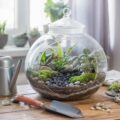
Discover what a pico terrarium is, how it differs from nano terrariums, and the best tiny plants to use for your micro-gardening setup. Pico Terrarium? The Ultimate Guide to Micro-Gardening
What is a Pico Terrarium? The Ultimate Guide to Micro-Gardening
The houseplant hobby is full of trends, but few are as mesmerizing as the move toward incredibly tiny ecosystems. If you've spent any time in botanical forums or indoor gardening communities, you've likely seen people obsessing over miniature setups. But when does a small terrarium become something else entirely? Enter the world of the plant pico terrarium.
Micro-gardening isn't just about shrinking down a regular plant; it's an entirely different way of interacting with nature. In this guide, we will break down exactly what a pico terrarium is, how it differs from its slightly larger cousin (the nano terrarium), and how you can build one of your own.
Pico vs. Nano: Understanding the Size Differences
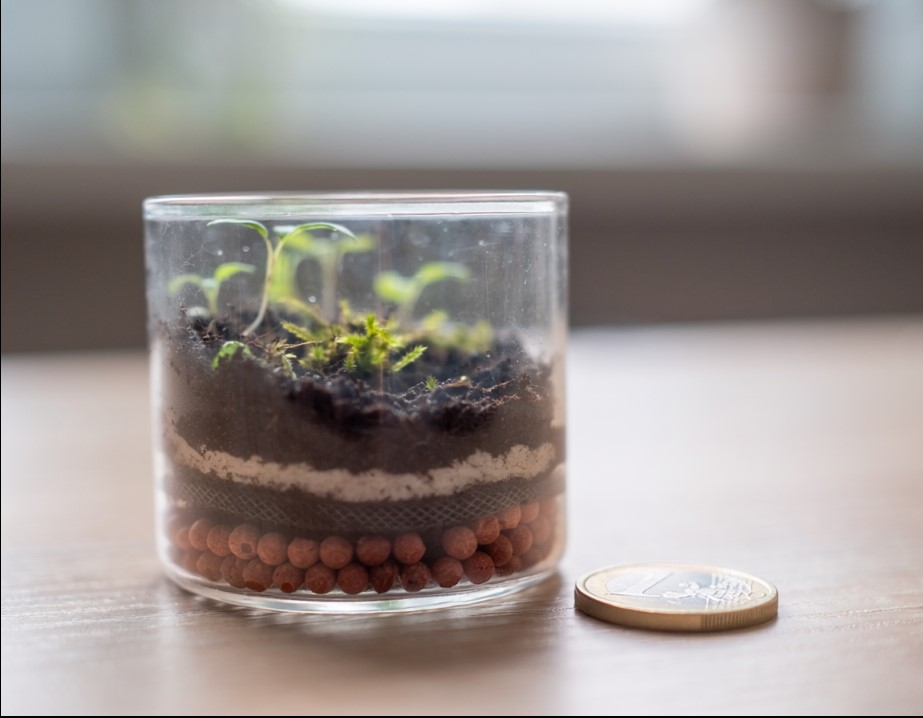
In the indoor plant world, "nano" and "pico" are actual classifications of size, borrowed from the metric system. Knowing the difference is crucial because the smaller the environment, the more challenging it is to maintain.
- Nano Terrariums: "Nano" means one-billionth, but in hobbyist terms, a nano setup typically ranges from 1 to 5 gallons (roughly the size of a large apple or a small half-gallon mason jar). Nano tanks are large enough to support complex landscapes, multiple plant species, and even tiny invertebrates like springtails.
- Pico Terrariums: "Pico" takes it a step further. A pico terrarium is generally under 1 gallon, with most falling somewhere between a shot glass and a baseball in volume. We are talking about setups housed in test tubes, tiny spice jars, mint tins, or small glass vials.
While a nano terrarium gives you a little room for error, a pico terrarium offers zero margin for mistakes. Watering a pico requires a literal drop or two from an eyedropper or syringe.
How Pico Terrariums Differ from Standard Terrariums
Building a standard 2-gallon glass terrarium is a forgiving process. You add an inch of drainage, a mesh screen, and three inches of soil. You cannot do this in a plant pico terrarium. If you put an inch of drainage in a 3-inch tall jar, there is no room for soil or roots.
Here is how pico setups differ fundamentally from standard ones:
- No Traditional Drainage: Pico setups almost never use gravel or LECA at the bottom. Every millimeter of space must be dedicated to substrate. Instead, they rely on the "wick method" or highly aerated soils to prevent root rot.
- The Substrate Must Be Flawless: You cannot use standard potting mix. Pico substrates are usually 100% inorganic or highly chunky—think pure sphagnum moss, or a blend of fine orchid bark and perlite. This ensures water flows through instantly without becoming waterlogged.
- Micro-Climate Volatility: A standard jar takes days to heat up or dry out. A tiny glass vial can overheat in direct sunlight in 15 minutes, or dry out in a few hours.
The Best Plants for a Pico Terrarium
You cannot use standard terrarium plants like Fittonia or Ferns in a pico setup. Their root systems are too large, and their leaves will quickly outgrow the tiny space, pushing against the glass and rotting.
Experienced micro-gardeners stick to "miniaturized" or naturally microscopic plants. The absolute best options include:
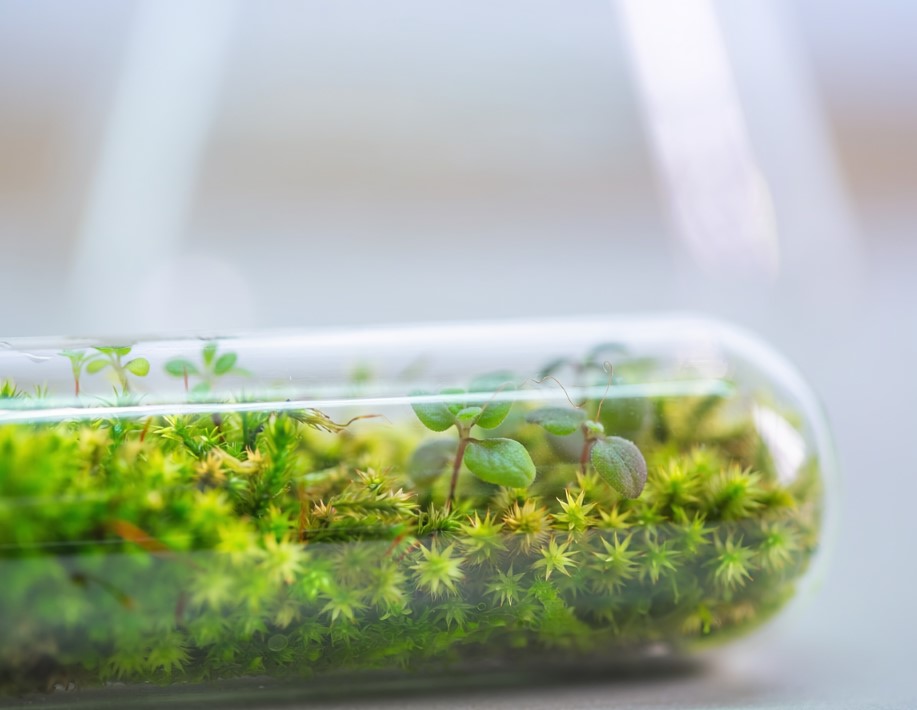
- Tiny Mosses (Bunryu, Sheet Moss, or Java Moss): Moss is the absolute backbone of pico terrariums. It requires incredibly little soil, thrives in high humidity, and stays incredibly small.
- Ficus pumila 'Minima' (Creeping Fig): While standard creeping fig is a monster, the 'Minima' variant has leaves the size of a pinhead, making it perfect for tiny landscapes.
- Hypoestes phyllostachya 'Micro': A dwarf version of the polka dot plant that stays incredibly compact.
- Begonia prismatocarpa: A miniature African violet relative that produces tiny, bright yellow flowers and stays under an inch tall.
- Aquatic plants grown emersed: Many plants sold for fish tanks (like Monte Carlo or Baby Tears) can be grown above water in high humidity, creating a lush, tiny lawn.
How to Care for Your Pico Terrarium
Caring for a pico terrarium requires a gentle touch and a watchful eye. Because the environment is so small, you cannot rely on a set watering schedule. You have to water based on the plant's signals.
- Watering: Use a syringe or a pipette. If it is a closed system, you may only need to add 1-2 milliliters of water every few weeks. If you see heavy condensation, do not water. If the moss looks dull or crispy, add a drop.
- Lighting: Keep them out of direct sunlight. A bright, indirect windowsill or a small desk LED grow light placed a few inches away is perfect.
- Pruning: You will need tiny scissors or tweezers. If a leaf touches the glass wall of a pico terrarium, moisture will sit on it, and it will rot. Prune aggressively to keep airflow moving through the tiny plant canopy.
Frequently Asked Questions
Can a pico terrarium be sealed closed?
Yes, but it is much harder to balance than a larger sealed jar. Because the water volume is so low, a closed plant pico terrarium can easily become a swamp or completely dry out in a matter of days. Most hobbyists recommend keeping pico setups open or with a very loose-fitting lid so you can manually control that tiny drop of water.
Where do people buy containers for pico terrariums?
You don't need to buy expensive specialized containers. The best pico setups are often "upcycled." Look around your house for glass spice jars, empty perfume sample vials, small candle holders, vintage watch glasses, or even clean glass medicine bottles. As long as it is glass and clear, it works.
Do I need springtails or isopods in a pico terrarium?
In a standard terrarium, these tiny bugs act as a clean-up crew, eating mold and dead leaves. In a pico terrarium, introducing live bugs is usually overkill and can disrupt the delicate balance of the tiny space. It is much easier to simply use tweezers to remove a dead leaf or wipe away a speck of mold manually.
📢 Build your own terrarium Ultimate guide